Be as good online as you are in real life.

I’m Mike Pinette. I help established businesses get found, understood, trusted and chosen. I work out what’s getting in the way, then I do the work: the words, search, content, the route to an enquiry and, when it’s needed, a new website that I design and build myself.

The business you’ve built should make it through.

People don’t experience your company from the inside. They search, compare, read reviews and ask AI. What they find becomes the business they know.

InsideThe business you’ve built. The expertise, the reputation, the people.
OutsideThe business people find. Searches, reviews, AI answers.

The expertise is there. The reputation is there. But too much gets lost between the company you’ve built and the person trying to choose it.

That’s the part I work on.

What I actually do.

I don’t hand over a report and leave you with the homework. Once we know what’s getting in the way, I do the work to fix it. Four examples of what that looks like:

  1. Found

    People look for what you do and find someone else.

    I find out what they search for and ask, then write and build the pages that answer it, and fix the basics that make a site hard for search engines to read.

    The aim: the right people reach the right page.

  2. Understood

    They find you, but can’t tell what you do best or who it’s for.

    I rewrite the offer in plain language and reorganise the website around it, so the important things are said first and the next step is obvious.

    The aim: people understand you before they have to ask.

  3. Trusted

    Your best work and your reputation barely show online.

    I turn what you already have into proof people can see: projects, case stories, reviews, photography and content that answers the questions buyers actually ask.

    The aim: people can see why others chose you.

  4. Chosen

    Interested people drift away before they get in touch.

    I follow the route from first click to your inbox. I simplify the form or booking step, make sure it reaches the right person and, where it helps, organise what the team knows so the reply is quick and accurate.

    The aim: more of that interest becomes a conversation.

When the website is what’s in the way

I design and build a new one.

I write it, design it, build it and check it myself, around the business it represents rather than a template: clear on a phone, readable by search engines and AI, with the enquiry route tested before it goes live.

Al Norte and Sercosan are mine. So is the site you’re reading.

See the websites

Who does the work?

You work with me, and I do most of this myself, websites included. Some projects need more than one person should take on: systems connected, equipment installed, or a team to look after it over time. In Spain, I work with Sercosan, the Santander company Presence is part of, where I also lead marketing. Since 1987 they have installed and supported the technology businesses run on, and they also build and maintain websites. Their site is in Spanish. I’m happy to make the introduction in English.

The work leaves a trail.

Different businesses. The same attention.

Sercosan

Santander, Spain

A good regional business that had outgrown the way it appeared online.

I started by learning what Sercosan actually sold. What customers bought. What the sales team talked about. What the company knew. Then I looked at how people were finding it.

I redesigned and rebuilt the website. Search work then led to new commercial pages, a clearer structure and better alignment between what Sercosan does and what people could find. Working closer exposed the next useful problems: scattered knowledge, disconnected enquiries, services that were hard to explain. So the work grew with the business.

To be clear, this isn’t an outside client. Presence is part of Sercosan, and I lead its marketing. That makes it the clearest example of what happens when I stay close to a business and the work keeps going.

Visit Sercosan
What customers need to findWebsite · search · commercial pages · content
What happens when they doEnquiry · the right person · follow-up
What helps the business respondService knowledge · customer context · useful automation
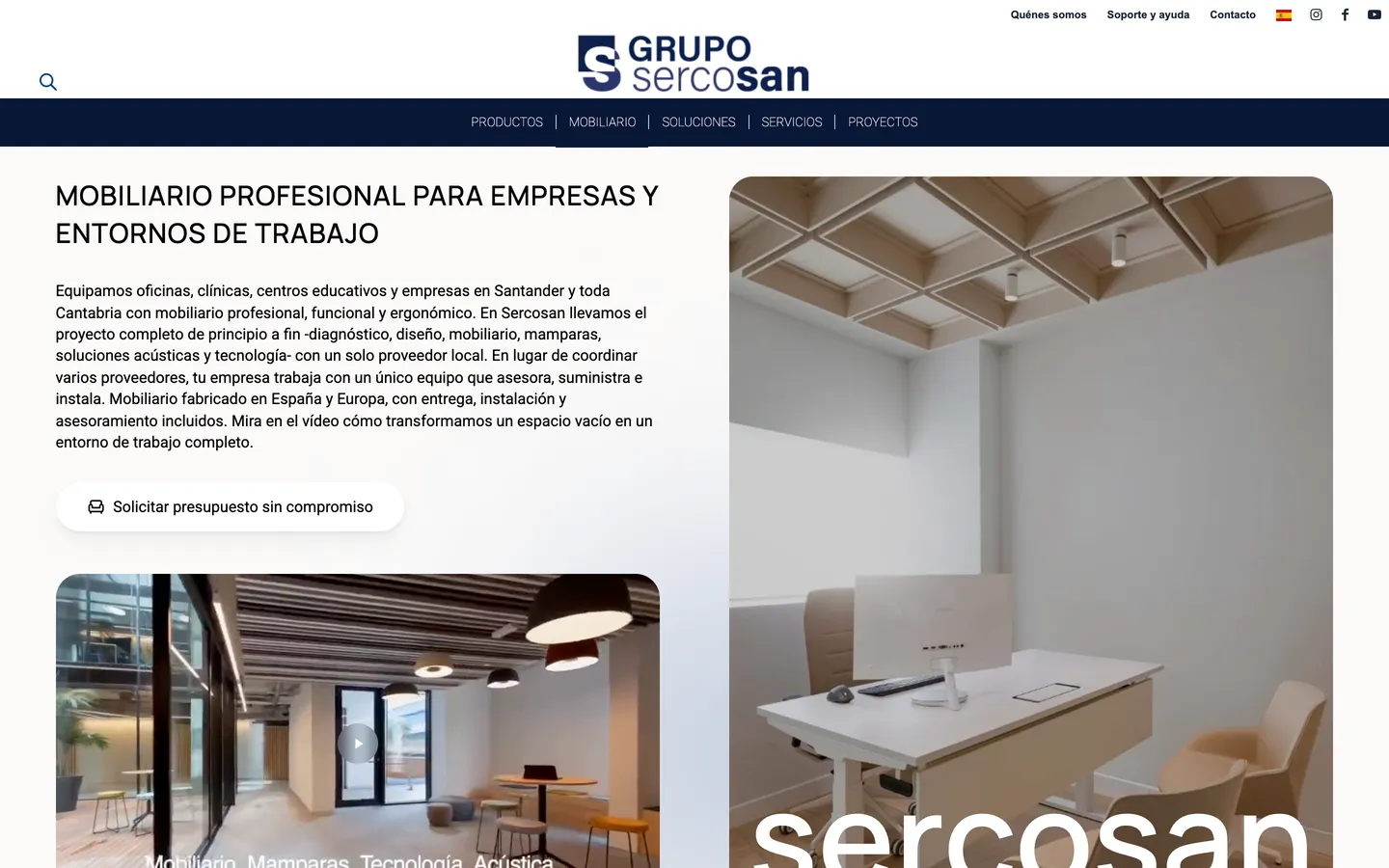
Sercosan’s office furniture page: the heading “Mobiliario profesional para empresas y entornos de trabajo” beside a tall photo of a finished office with a coffered wooden ceiling.
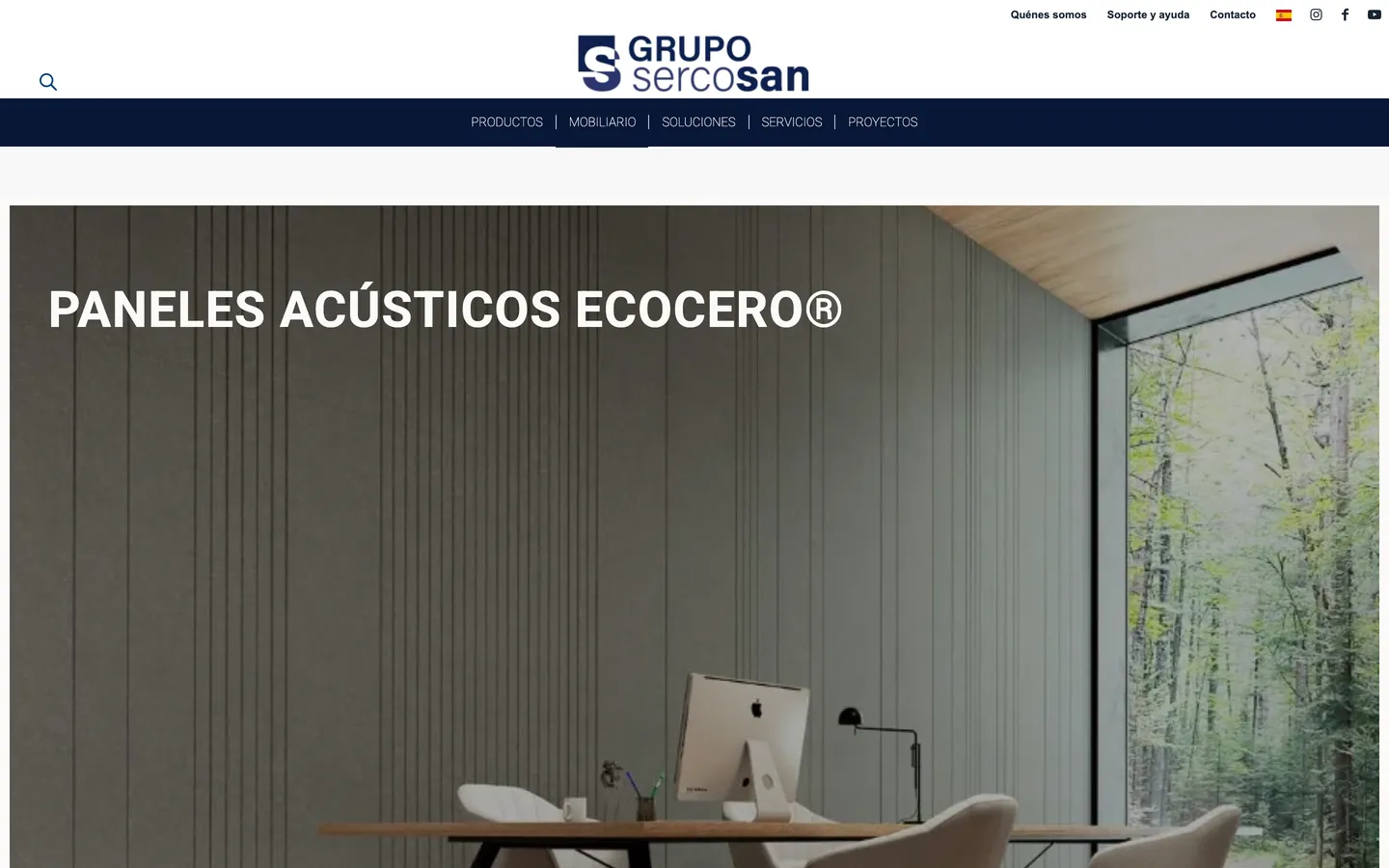
Sercosan’s acoustic panels page: the heading “Paneles acústicos Ecocero” across a photo of a panelled office opening onto a forest.

Al Norte

Santander, Spain

Already good. Now better represented.

Al Norte already had the difficult part. A real restaurant. Good food. A clear point of view. Customers who liked it.

The job wasn’t to invent a brand story. It was to make more of the real business visible. I designed and built the website, then worked on search, local presence, content and photography. It didn’t need reinventing.

Visit Al Norte
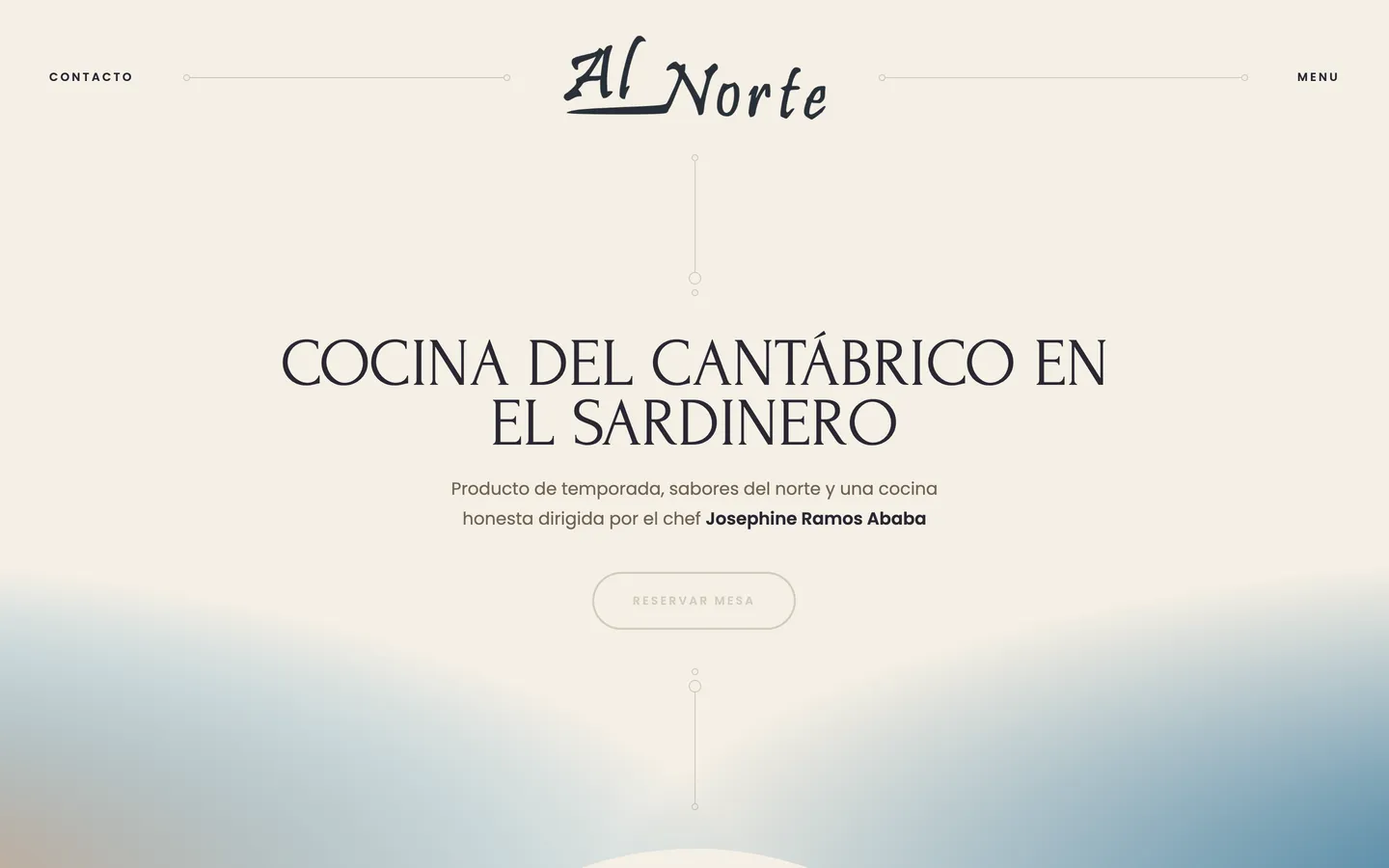
The Al Norte home page: the restaurant’s hand-lettered name above the headline “Cocina del Cantábrico en El Sardinero”, on warm paper over a pale blue wash.
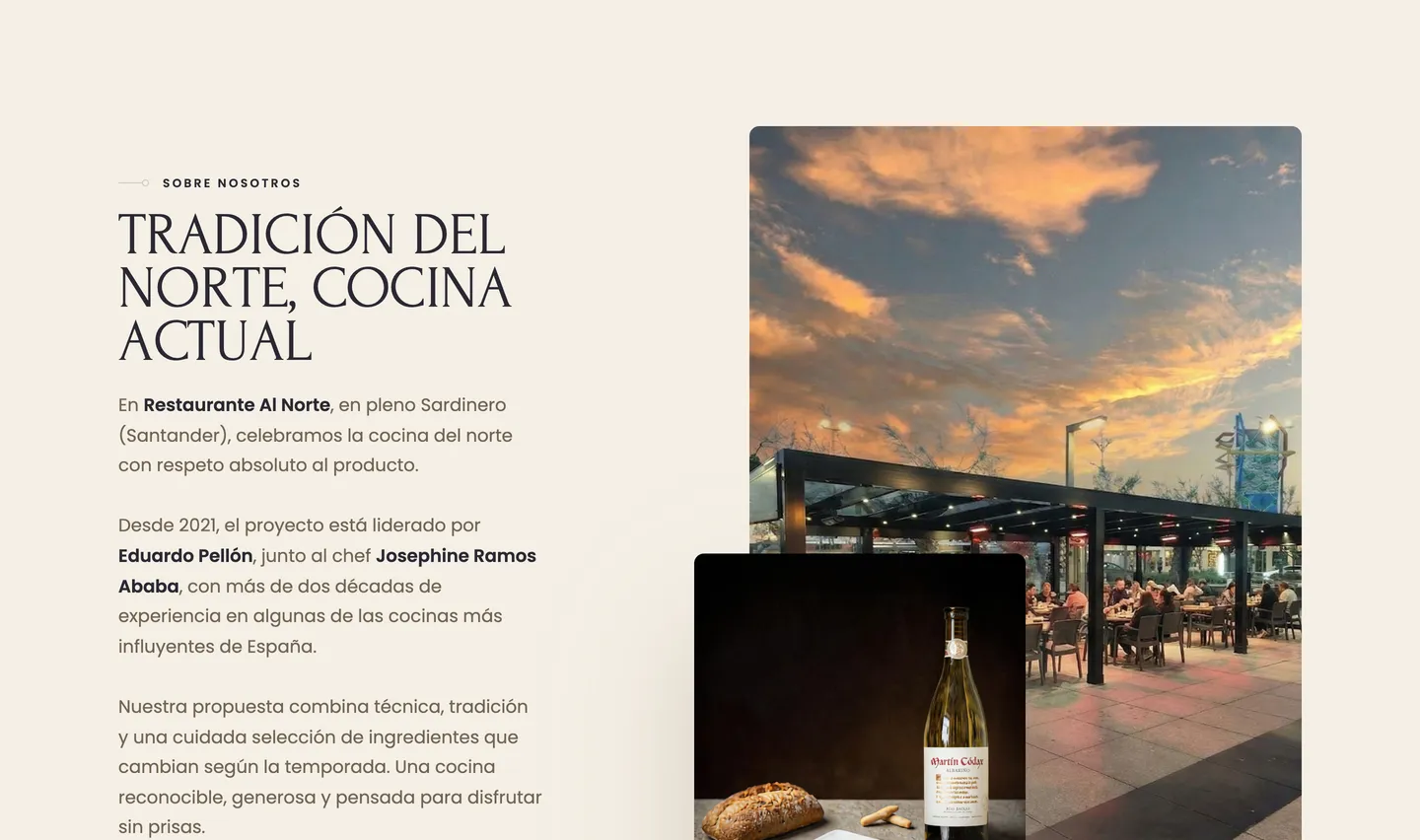
The Al Norte “Sobre nosotros” section: the heading “Tradición del norte, cocina actual” beside photos of the terrace at sunset and a dish with a bottle of Albariño.

And the site you’re reading.

Designed and built by me, down to the sea at the top of the page.

Mike Pinette, founder of Presence, on the beach
Mike Pinette, founder

The person you hire stays in the room.

I spent years working in businesses where trust was earned face to face before I ever worked seriously on websites or search.

Hospitality taught me to notice people. Sales taught me to listen. Working inside businesses taught me that what sounds good in a meeting still has to work on Monday morning.

I’m also a painter. As Sea by Land Studio, I make murals and original art for hospitality, wellness and private spaces. The habit is the same: look properly at a place before changing anything.

I learned the customer before the interface.

When you work with Presence, you work directly with me. I do the research. I make the work. I check it. I stay involved.

How we start.

Starting is easy: a 15-minute call, an email or a short form. Nothing else is agreed until we’ve both decided there’s work worth doing.

  1. Look

    I learn the business and research what people find: what you sell, who buys it and what matters commercially. If I contacted you first, I’ve already started.

  2. Show

    I show you what I found, what it’s based on and how sure I am. You know the business better than I do, so this is where you correct me.

  3. Decide

    We decide whether anything deserves doing. There may be one clear problem, several connected ones, or not enough to justify working together. That’s fine too.

  4. Do the work

    We agree what needs to happen, what success would look like and what I need from you. Then I do it, and check that it works.

  5. Keep going

    If the relationship makes sense, I stay involved. Researching, making, publishing, checking and paying attention as the business changes.

Before I recommend anything, I look.

Whatever the work turns out to be, it starts with learning the business and looking at what is actually happening around it.

Illustrative chart · soundings in metres43°28′ N · 3°48′ W
  1. What are people looking for?

    I identify the searches and questions connected to the things you actually want to sell. Not every keyword matters. I want to know where there is real interest, and what someone needs to understand before they choose you.

    Start with the questions that matter.

  2. Where do you appear?

    I test relevant searches in the markets that matter. Where you’re visible. Where you’re missing. Which pages appear. One search doesn’t tell me much. Repeated behaviour does.

    Look for patterns, not isolated results.

  3. Who keeps appearing instead?

    The businesses competing for your customers online aren’t always the ones you consider competitors. I look at who repeatedly appears when people search for the work you want. Then I look at why.

    The same names. Again and again.

  4. What can AI understand about your business?

    I look at relevant answers, what information can be found about your business, what’s accurate, what’s missing and who gets mentioned when you don’t. I treat that as evidence, not a score to chase.

    A useful signal. Never the whole picture.

  5. Does what people find explain why you’re good?

    Visibility only gets someone through the door. They still need a reason to choose you. I look at the offer, website, proof, reviews, photography and content against the business I’ve actually learned about.

    Does this feel like the same company?

  6. What happens when someone is interested?

    I follow it through. Can they understand what to do next? Are the important questions answered? Can they reach the right person? Does the enquiry actually arrive?

    Sometimes the most valuable fix is right here.

Then I decide what matters.

I don’t want to hand you a list of everything that could theoretically be improved. There will always be more. I want to know which things are worth doing.

I compare signals, look for patterns and keep the evidence behind what I find. I separate what I can show from what I only suspect.

If the evidence isn’t strong enough, I don’t use it.

Something real behind the business.

I work best with established businesses where trust matters and customers take time to choose. Owners who care how their company is represented. Teams doing good work that isn’t coming through clearly enough. I’d rather know a smaller number of businesses properly.

Professional services · Hospitality · Health & wellness · Architecture & design · Property · Specialist B2B · Education

  • I won’t recommend work just to fill a monthly agreement.
  • I won’t quietly turn an assumption into a fact.
  • I won’t tell you everything needs fixing.

I don’t want to manufacture a more impressive version of your company. I want the real one to come through.

If I contacted you, I found something.

I’ve already spent some time looking. Not enough to pretend I understand the whole company. Enough to notice something worth showing you.

Illustrative chart · soundings in metres43°28′ N · 3°48′ W

An illustrative example of what I’d show you, not a finding about your business

Observed

An important service. Difficult to find.

Supporting observations
  • Search A Page absent
  • Search B Page absent
  • Search C A directory, not your page
What it may mean

The service may be hard to discover. That doesn’t prove demand is being lost.

What I’d do about it

Give the service a page of its own, link to it from where people already arrive, and check whether it starts to appear.

Did I contact you?

Reply to my email, or write to me here. Mention your business and I’ll send what I found, what I based it on and what I think it means. You decide whether it matters.

See what I found

Opens an email to Mike.

Or book 15 minutes and I’ll walk you through it

Found Presence another way?

Tell me about the business and what you’d like more of. I read every message myself, and if I see something worth showing you, I’ll send it.

Opens a short form from Formflow, the form service I use. It sets a cookie when it opens. See the privacy notice.

Prefer to talk? Book 15 minutes

Either way, it comes straight to me. Or write directly: [email protected]